Review: Professional Overthinker Tumbler Wrap for Embroidery
As a designer who spends more time staring at stitch maps than most people care to admit, I approach every new digital embroidery file with a mix of curiosity and skepticism. When I first encountered the Professional Overthinker Tumbler Wrap, my initial reaction was that this was strictly a sublimation asset. The product details clearly state it includes high-resolution PNG files sized for 20oz skinny tumblers. However, in our line of work, we often need to adapt assets across different mediums. I wanted to know: could this graphic translate into a viable machine embroidery design for custom apparel or home decor, or is it destined to remain purely digital?
First Impressions and Visual Personality
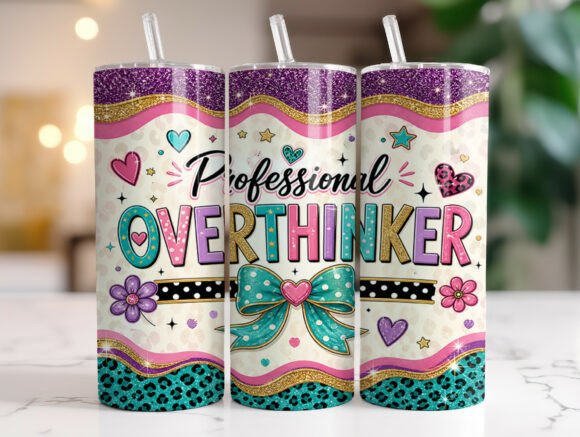
The mood of this graphic is immediately relatable. The "Overthinker" theme taps into a very specific, popular niche within the crafting community. Visually, the layout appears balanced, with a shape that suggests it was originally intended to wrap around a curved surface. For an embroiderer, this presents an interesting challenge. The detail level in a 300 DPI PNG is usually sharp enough to trace or digitize manually if you are looking to create a unique embroidered patch or a direct-to-garment hybrid project. The visual personality is witty yet clean, avoiding the cluttered look that often plagues trend-driven graphics. This simplicity is crucial when considering how threads will lay on fabric; too much noise in a design can result in a muddy finished product.
Real-World Application: The Custom Tote Scenario
To test the viability of this concept, I imagined a real-life scenario: a customer order for a boutique bookstore needing a batch of tote bag designs for their staff. They wanted something humorous but professional. While the original file is a Tumbler Wrap, the central motif of the "Overthinker" text and accompanying art could easily be isolated and adapted. If I were to use this as a reference for a new embroidery project, I would likely focus on the typography. The way the text flows in the wrap version suggests movement, which translates beautifully into a satin stitch application on a canvas tote. Imagine this stitched in a contrasting thread color on a natural cotton bag; it becomes an instant conversation starter at a craft fair or a perfect personalized gift for a stressed-out graduate.
Furthermore, for those running a small shop product line, adapting this graphic for sweatshirt embroidery makes sense. The chest area of a hoodie provides ample space to recreate the vibe of the tumbler wrap without the curvature constraints. It fits perfectly into the current market demand for mental health awareness and self-deprecating humor in custom apparel. The key here is not to use the PNG directly for stitching—since embroidery machines require specific vector-based files—but to use the graphic as a high-fidelity mockup or a tracing guide for digitizing.
Technical Considerations for Stitching
Before rushing to hoop up your machine, there are critical technical factors to consider when translating a graphic like the Professional Overthinker Tumbler Wrap into thread. First, stitch density is paramount. A design meant for print might have fine lines that simply cannot hold up under a fill stitch or even a delicate running stitch on certain fabrics. If you attempt to recreate this on a textured fabric like a waffle knit towel or a fuzzy fleece, those tiny details could get lost. You must evaluate whether the design elements are large enough to be stitched cleanly.
Fabric choice plays a massive role in the success of such a project. On thin fabric, a dense recreation of this graphic could cause puckering, ruining the handmade product aesthetic. Conversely, on stretchy fabric like a jersey t-shirt, the stability of the design depends entirely on your stabilizer selection. I always recommend testing the design on scrap fabric first. Check how the thread colors interact with the base material; a design that pops on a white tumbler might vanish on a navy blue sweatshirt unless you adjust the palette for sufficient contrast.
Navigating Small Hoops and Curved Surfaces
One of the trickiest aspects of adapting a wrap-style graphic is the size. The original dimensions are roughly 9.3″ x 8.2″, which is quite large for standard home embroidery hoops. If you intend to stitch a version of this on a cap or a smaller item like a baby onesie, you will need to scale it down significantly. Be warned: shrinking detailed graphics can lead to compromised stitching clarity. Tiny lettering may merge together, and intricate corners might become blobby. For baby embroidery, simplicity is safety; ensure there are no small, loose threads that could pose a hazard. Additionally, curved surfaces like caps require specialized hooping techniques. A design originally meant for a flat or cylindrically wrapped surface might distort when forced onto the front panel of a baseball cap.
Impact on Brand and Customer Trust
For Etsy sellers and creative entrepreneurs, the quality of your design assets directly influences buyer engagement. Using a well-thought-out concept like the Professional Overthinker Tumbler Wrap as inspiration for your physical goods can enhance your brand consistency. Customers recognize professionalism in the neatness of the stitch and the appropriateness of the design placement. A sloppy adaptation of a crisp graphic can erode trust. However, when executed correctly, turning a popular digital trend into a tactile holiday embroidery piece or a wedding gift adds significant perceived value. It shows that you understand current aesthetics and have the technical skill to bring them to life in thread.
This approach also works wonders for printable mockups. Even if you aren't stitching the item immediately, having a high-quality graphic allows you to create realistic previews for your online store. This helps customers visualize the finished product, increasing the likelihood of a sale. Whether you are selling commercial embroidery services or digital products, the versatility of a strong graphic is undeniable.
Final Designer Notes and Best Practices
If you decide to move forward with using the Professional Overthinker Tumbler Wrap as a basis for your next creation, keep these practical tips in mind. Always review the license terms; just because a file is available for download doesn't automatically grant rights for unlimited commercial resale of the digitized version. Confirm whether the creator allows derivative works. Inspect small details by zooming in on the PNG to see where breaks in the design might naturally occur for stitching. Test your design in black and white mockups to ensure the composition holds up without relying on color.
Remember, while this specific product is categorized under Graphics and Tumbler Wraps, its true potential lies in how creatively you can adapt its core message to the medium of embroidery. Whether it ends up on an apron, a pillow cover, or a kitchen towel, the goal is to maintain the wit of the original while respecting the limitations and beauty of the needle and thread. By taking the time to plan your hoop size, select the right applique design techniques if layering is needed, and choose quality materials, you ensure that your final output is not just a product, but a piece of art that resonates with your audience.