Review: Deer Elk Hunting Season Tumbler Wrap for Embroidery
As a designer who spends more time staring at stitch maps than most people spend watching TV, I approach new design assets with a healthy dose of skepticism. We've all been there: you buy a digital embroidery file that looks stunning in the preview, only to find out it's a nightmare of underlay issues or impossible density once it hits the hoop. So, when I came across the Deer Elk Hunting Season Tumbler Wrap, my first instinct wasn't to rush to the checkout. It was to analyze whether this graphic could actually translate into a viable embroidery project for my small shop.
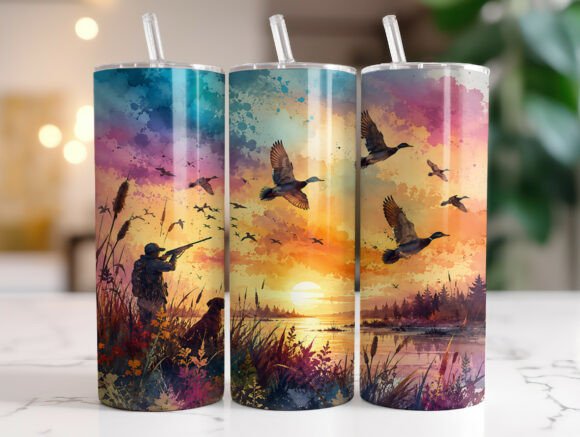
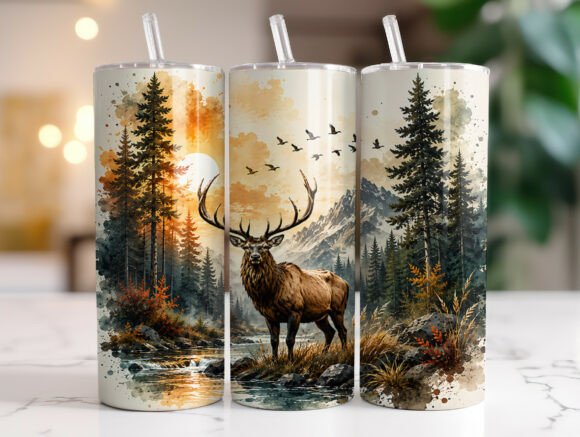
The product description highlights that this is an instant download featuring high-resolution PNG files, specifically sized at 9.3″ x 8.2″ and optimized for 20oz skinny tumblers. While the listing categorizes it under Tumbler Wraps and Graphics, my mind immediately went to how these elements would perform as a machine embroidery design. The rustic theme of deer and elk during hunting season carries a specific mood—it's outdoorsy, rugged, and deeply personal for a specific niche of customers. But can that mood survive the translation from a printed sublimation wrap to thread on fabric?
First Impressions and Visual Personality
The visual personality of the Deer Elk Hunting Season Tumbler Wrap is undeniably strong. The layout suggests a panoramic feel, which is perfect for wrapping around cylindrical objects, but in the world of embroidery, this wide aspect ratio offers interesting challenges and opportunities. The imagery likely relies on silhouettes, antlers, and perhaps some typography related to the season. For an embroiderer, this means we are looking at potential applications beyond just tumblers. Imagine this adapted for a tote bag design where the width allows the motif to stretch across the front panel, or a sweatshirt embroidery piece that sits boldly across the chest.
The detail level in a 300 DPI PNG is usually crisp enough to trace or digitize manually if you have the skills, or to use as a reference for placing pre-digitized elements. However, if you are planning to use this as a direct print-and-stitch hybrid (printing the background and embroidering accents), the contrast is key. The "hunting season" theme often utilizes earth tones—greens, browns, and oranges. When translating this to thread, you need to ensure your thread colors have enough separation. A dark brown elk against a forest green background might look great on screen, but without proper stitch density management and contrasting outlines, it can turn into a muddy mess on the finished product.
Real-World Application Scenarios
Let's get practical. I recently had a client request custom gear for a family hunting trip reunion. They wanted matching items that felt cohesive but not identical. This is where a versatile graphic like the Deer Elk Hunting Season Tumbler Wrap shines. While the file is marketed for tumblers, I immediately saw its potential for a run of custom apparel. By isolating the central deer or elk motif, I could create a left-chest logo for flannel shirts or a large back patch design for vests.
Consider the handmade product market on Etsy. An Etsy seller focusing on outdoor lifestyle goods could use this graphic to create a line of holiday embroidery gifts. Think about a heavy canvas apron for the person doing the butchering or cooking at camp, or a set of kitchen towels for the lodge. The 9.3-inch width is substantial; it's too big for a standard baby onesie unless you scale it down significantly, but it is perfect for a pillow cover or a statement embroidered patch that can be ironed or sewn onto a backpack.
For those running a craft business, the versatility of this asset adds value. You aren't just selling a tumbler; you are selling a brand aesthetic. If a customer loves the tumbler, they might want a matching hat. Using the same source graphic ensures brand consistency. However, you must be careful with curved surfaces. While the original file includes a "tapered" version for tumblers, applying this to a cap requires serious distortion correction. The geometry of a baseball cap is very different from a straight-walled tumbler. If you attempt to stitch this directly onto a cap without adjusting the layout, the outer edges of the design will look stretched and distorted.
Technical Considerations for Stitching
Here is where experience matters. Just because a file is high resolution doesn't mean it's ready for the needle. If you are digitizing this yourself or hiring someone to do it based on this PNG, pay close attention to the stitch density. Hunting-themed designs often feature dense foliage or fur textures. If these areas are too dense, you risk needle deflection, thread breaks, and a stiff, board-like feel on the fabric. This is especially critical for baby embroidery or lightweight tees where comfort is paramount. A heavy fill stitch on a thin triblend shirt will pucker and weigh the garment down.
You also need to think about your hoop size. The dimensions provided (9.3″ x 8.2″) are large. Not every home machine has a hoop that can accommodate this width in a single go. You might need to split the design into two hoops and match them up, which requires precision marking and a steady hand. Alternatively, you might choose to crop the design, focusing just on the animal silhouette for smaller projects like caps or pocket logos.
Fabric texture plays a huge role here. A rustic design often looks best on textured fabrics like canvas, denim, or fleece. However, these fabrics can be tricky. Fleece requires a topping to prevent stitches from sinking in, while denim might need a stronger needle and a robust stabilizer to handle the tension. If you are stitching on dark fabric, ensure your digitizing includes a solid underlay to prevent the fabric color from peeking through the lighter threads of the design.
Maximizing Value and Customer Trust
In the competitive world of commercial embroidery, the quality of your finished product dictates your reputation. Using a well-thought-out design like the Deer Elk Hunting Season Tumbler Wrap can elevate your offerings, but only if executed correctly. Customers trust makers who deliver clean, durable items. If the stitching pulls apart after the first wash because the density was too high or the stabilizer was wrong, you lose that trust.
To maintain professionalism, always test the design on scrap fabric first. Do not skip this step. Check how the satin stitch borders (if applicable) lay against the fill stitch areas. Review the small details—are there tiny lettering elements that might vanish when stitched out? If the design includes dates or names, ensure they are large enough to be legible. It is also wise to test your design in black and white mockups to verify that the contrast holds up even without color reliance.
Final Verdict for Designers
The Deer Elk Hunting Season Tumbler Wrap is a solid foundation for a variety of small shop products. Its strength lies in its thematic clarity and generous size, which allows for creative cropping and adaptation. However, it is not a "one-size-fits-all" solution. Success depends on your ability to adapt the graphic to the constraints of embroidery machinery and fabric physics.
Before committing to a production run, confirm the licensing terms. Since this is sold as a graphic file, ensure you have the right to use it for commercial embroidery projects if you plan to sell the stitched items. Some designers allow physical sales but restrict digital redistribution. Always read the fine print.
Ultimately, this design asset is a tool. In the hands of a skilled maker who understands running stitch limitations, applique design techniques, and proper stabilization, it can become a bestseller for the autumn season. Whether you are creating a personalized gift for a loved one or stocking inventory for a craft fair, treat this graphic as a starting point. Adapt it, respect the medium of thread, and you will create something that resonates far more deeply than a simple printed image ever could.