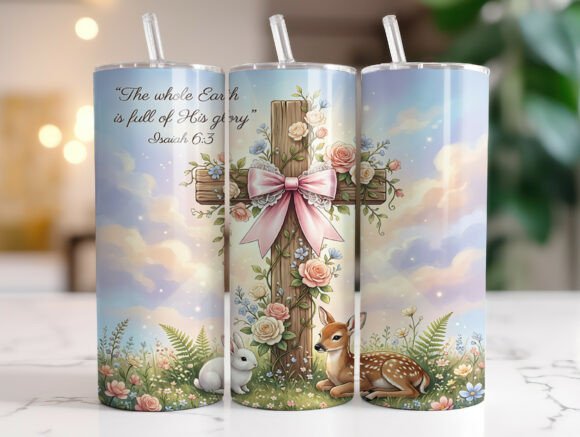
Reviewing the Happy Easter 20 Oz Tumbler Wrap PNG for Stitch Projects
As a designer who spends most of my day digitizing files and reviewing embroidery projects for small business owners, I approach every new asset with a critical eye. We often see files marketed for one specific use that can actually shine in another if you know how to adapt them. Today, I am taking a close look at the Happy Easter 20 Oz Tumbler Wrap PNG. While this file is explicitly categorized under Tumbler Wraps and intended as a printable graphic, my goal is to evaluate its potential as a source file for machine embroidery. Can a high-resolution PNG meant for sublimation or UV printing translate into a stunning handmade product? Let's dive into the practical realities of using this design for stitched goods.
First Impressions: Mood and Layout Potential
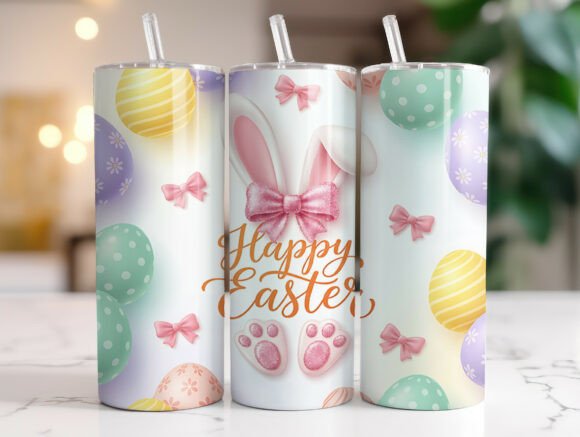
Upon opening the file, the first thing that strikes me is the clarity. The description notes a resolution of 300 DPI with dimensions of 9.3″ x 8.2″. For a digital artist, this is a solid foundation. The layout is designed to wrap around a curved surface, which implies a specific flow to the artwork. In the context of embroidery, this curvature offers an interesting challenge and opportunity. The "Happy Easter" theme suggests a mood that is cheerful, spring-forward, and family-oriented.
When I visualize this as a machine embroidery design, I am looking at how those smooth digital gradients would translate into satin stitch and fill stitch textures. The size is generous, meaning there is ample room for detail, but it also demands a large hoop. If you are planning to stitch this directly onto fabric, you aren't working on a small pocket; you are committing to a statement piece. The visual personality of the graphic feels versatile enough to move beyond tumblers. It has the boldness required for a tote bag or the warmth needed for a seasonal pillow cover.
Real-World Application: From Screen to Stitch
Let's imagine a real-life scenario. You run a small boutique shop selling custom personalized gifts. A client approaches you wanting a unique Easter gift for a teacher, something more tactile than a printed mug. You have this Happy Easter 20 Oz Tumbler Wrap PNG in your library. Instead of printing it on paper, you decide to create a custom embroidered apron or a heavy-duty canvas tote bag.
Because the file is a PNG, it is not yet an embroidery file like PES or DST. This is a crucial distinction. To use this effectively, you would need to digitize it or use auto-digitizing software with caution. The clean lines of the original graphic suggest it would convert well into an applique design. Imagine cutting out the main Easter elements from felt or cotton fabric and stitching them down with a tight satin border. This technique preserves the crisp edges of the original PNG while adding the textured charm of thread.
For custom apparel, such as a heavyweight sweatshirt, this design could serve as a large chest print alternative. However, since we are talking about embroidery, placing this on the back of a jacket or the front of a oversized hoodie makes sense. The 9.3-inch width allows for significant impact. Customers reacting to a finished product like this often appreciate the effort involved in stitching over simple printing. It elevates the perceived value of the item, turning a standard holiday gift into a heirloom-quality piece.
Navigating Fabric and Hoop Constraints
While the potential is high, there are technical hurdles to consider before you start stitching. The original file is sized for a 20 oz tumbler, which is a rigid, curved object. Fabric behaves differently. If you attempt to stitch this on a stretchy fabric like a thin t-shirt, the density of the stitches required to fill a 9-inch area could cause puckering or distortion.
- Hoop Size: Ensure your machine can handle the dimensions. A standard 5x7 hoop will not work. You will likely need a large hoop or a multi-position hooping strategy.
- Stabilizer: Given the size, using a cut-away stabilizer is non-negotiable for durability, especially if the finished product will be washed frequently.
- Fabric Texture: Avoid highly textured fabrics like thick waffle knits for the base, as the fine details of the Easter graphics might get lost. Smooth cottons, linens, or canvas are safer bets.
- Detailed Corners: Check the small lettering in the "Happy Easter" text. In a PNG, these look sharp. In thread, tiny letters can fill in and become unreadable if the stitch density is too high.
If you are considering this for a cap, be very careful. The curved nature of the original design matches a cap, but the height (8.2 inches) is likely too tall for a standard front panel. You might need to crop the design significantly, focusing only on the central motif rather than the full wrap.
Enhancing Brand Value and Customer Trust
For Etsy sellers and creative entrepreneurs, the choice of design assets directly impacts brand consistency. Using a high-quality source file like this demonstrates attention to detail. When a customer receives a tote bag where the Easter bunny motif is perfectly stitched with vibrant thread colors, it builds trust. They see that you didn't just slap a cheap decal on a bag; you curated the design and executed it with skill.
This approach works exceptionally well for holiday embroidery collections. By adapting a popular graphic trend (tumbler wraps) into a textile format, you differentiate your small shop product from the mass market. It shows innovation. Furthermore, because the file includes both straight and tapered versions, you have options. The straight version is ideal for flat items like pillow covers or tea towels, while the tapered version could inspire a creative placement on a tapered sleeve or a uniquely shaped patch.
Practical Designer Notes for Success
Before committing to a production run or promising a deadline to a client, follow these practical steps:
- Test on Scrap: Always stitch a test run on scrap fabric of the same weight you intend to use. This reveals issues with pull or registration.
- Check Contrast: Review how the design looks on dark versus light backgrounds. You may need to adjust thread colors or add an underlay if the original PNG relies on transparency.
- Mockup Verification: Create black and white mockups to ensure the design holds up without color reliance. This helps identify areas that might be too dense.
- Licensing Check: The product description states this is a digital file for instant download. Verify the license terms regarding commercial use. Just because you can buy it doesn't always mean you can sell the stitched result without restrictions.
- Digitizing Quality: Since this is a PNG, remember that the quality of the final embroidery depends heavily on how well it is digitized. Do not rely solely on auto-digitize functions for complex graphics.
In conclusion, the Happy Easter 20 Oz Tumbler Wrap PNG is a versatile asset that extends beyond its primary category of Graphics. With the right technical approach, it can become the centerpiece of a beautiful embroidered patch, a festive baby embroidery item, or a standout piece of commercial embroidery inventory. It requires a thoughtful transition from screen to needle, but for the experienced maker, that process is where the real magic happens.