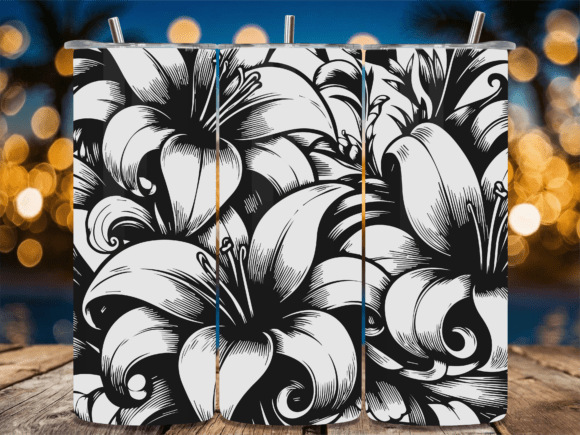
Review: Modern Lily Bloom Print Laser Tumbler for Crafters
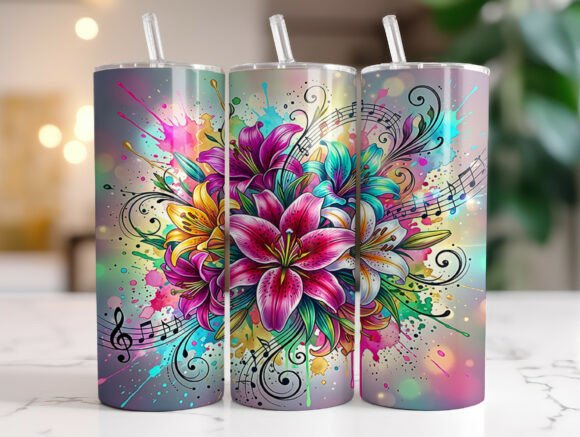
As a designer who spends more time staring at stitch maps than most people spend watching television, I approach every new digital embroidery file with a healthy dose of skepticism. We have all been there: you buy a beautiful graphic online, load it into your software, and realize the density is a nightmare or the details are too fine for anything other than a silk handkerchief. Today, I am taking a close look at the Modern Lily Bloom Print Laser Tumbler. While this asset is marketed primarily as a laser engraving wrap for Stanley-style tumblers, my instinct as an embroidery specialist is to evaluate its potential beyond the laser cutter. Can this floral motif translate into a stunning machine embroidery design for custom apparel and home goods? Let's dig into the practical reality of using this graphic in a real-world stitching scenario.
First Impressions: Mood and Layout
The moment I opened the file to inspect the lines, the first thing that struck me was the elegance of the composition. The lily theme suggests a mood of calm sophistication, perfect for boutique branding or high-end personalized gifts. Unlike some chaotic floral patterns that feel cluttered the moment they are digitized, this layout has breathing room. The curves of the petals and the flow of the stems suggest a natural movement that would look incredible when rendered in thread.
For an Etsy seller or small shop owner, visual personality is everything. This design avoids the generic, clip-art feel that plagues many design assets on the market. It feels intentional. However, because it originates as a laser graphic intended for a full-wrap tumbler, the scale is expansive. When adapting this for embroidery, one must be mindful of how that wide, sweeping layout translates to the confined circular space of an embroidery hoop. It is not just about shrinking the image; it is about reimagining the focal point.
Real-World Application: The Tote Bag Test
To truly understand the viability of the Modern Lily Bloom Print Laser Tumbler for stitching, I envisioned a specific project: a custom canvas tote bag for a local florist's shop. This is a common request for craft business owners—creating branded merchandise that feels handmade yet professional. In this scenario, the lily motif serves as a perfect brand ambassador.
If I were to stitch this onto a heavy-duty canvas tote bag design, the large format of the original graphic works in my favor. I could isolate the central bloom and use a combination of satin stitch for the petal edges and a lighter fill stitch for the interior details. The result would be a textured, tactile logo that elevates the perceived value of the bag. Customers are far more likely to trust a brand that invests in quality handmade product presentation, and a well-executed floral embroidery speaks volumes about attention to detail.
Alternatively, consider sweatshirt embroidery for a boutique clothing line. Placing a simplified version of this lily on the chest pocket area of a oversized crewneck creates a subtle, chic look. The organic shapes of the lily contrast beautifully against the structured seams of a garment, adding a touch of nature-inspired artistry to custom apparel.
Navigating Technical Challenges
Here is where we need to be realistic. Just because a graphic looks good on a screen does not mean it will stitch out perfectly on every fabric. The Modern Lily Bloom Print Laser Tumbler was designed for laser engraving, which handles fine lines and gradients differently than a needle and thread. If you attempt to stitch this exactly as is on a stretchy fabric like a baby onesie, you are asking for puckering and distortion.
There are specific situations where this design requires careful handling:
- Small Hoop Sizes: The original wrap is wide. Fitting the entire composition into a 4x4 inch hoop might crush the details, making the stitch density too high and causing thread breaks.
- Textured Fabrics: On towels or waffle weave, fine running stitches can get lost. You would need to increase the stroke width or use a heavier thread weight to ensure visibility.
- Dark Fabric: If stitching on navy or black, the light colors of the lily might require an underlay or even an applique design approach to prevent the background fabric from showing through the gaps.
- Curved Surfaces: While great for flat items, stitching this on a cap requires breaking the design into smaller sections to accommodate the curve of the front panel.
Furthermore, if your final product needs frequent washing, such as a kitchen towel or a child's shirt, dense areas of stitching can become stiff and uncomfortable. In these cases, simplifying the fill areas or opting for a redwork style (using only outlines) might preserve the aesthetic while improving durability.
Enhancing Brand Value and Customer Trust
Why go through the trouble of adapting a laser file for embroidery? Because the finished product offers a level of tangibility that prints cannot match. When a customer holds an embroidered patch or a monogrammed pillow cover featuring the Modern Lily Bloom Print Laser Tumbler motif, they feel the quality. This tactile experience builds customer trust and encourages repeat business.
For commercial embroidery projects, consistency is key. Using a recognizable floral element across different products—from aprons to blankets—creates strong brand recognition. It tells your audience that you have a cohesive vision. Moreover, in the era of social media, a beautifully stitched item is highly "shareable." A close-up video of the needle working through the lily petals can be a powerful marketing tool for your small shop product listings.
Practical Notes for the Designer
Before you commit to stitching this design on a client's expensive garment, here is my professional advice based on years of trial and error:
- Test on Scrap First: Never skip this step. Stitch the design on a scrap piece of the actual fabric you intend to use. This reveals issues with tension and registration immediately.
- Check Thread Contrast: Ensure your chosen thread colors pop against the fabric. A low-contrast choice can make a detailed design look muddy from a distance.
- Review Stitch Density: If the digitized version feels too heavy, manually reduce the density in your software to prevent fabric distortion.
- Confirm Hoop Size: Make sure your machine's maximum hoop size can accommodate the scale you want. You may need to split the design if it exceeds your machine's capacity.
- Inspect Small Details: Zoom in on the tiniest leaves or stem tips. If they are thinner than 1mm, they might not stitch out cleanly and may need to be thickened or removed.
- Mockup in Black and White: Convert your preview to grayscale. If the design loses its definition without color, the structure relies too much on hue rather than form.
- Stabilizer Selection: Match your stabilizer to the fabric. Cut-away is best for stretchy knits, while tear-away works for stable wovens.
- Licensing Check: Since this is originally a laser file, verify the license terms before selling finished embroidered items. Some creators restrict commercial use or require an upgraded license for physical goods.
In conclusion, the Modern Lily Bloom Print Laser Tumbler is a versatile graphic that holds significant promise for the creative embroiderer willing to adapt it. It is not a plug-and-play solution for every scenario, but with thoughtful digitizing adjustments and material selection, it can become a standout feature in your portfolio of holiday embroidery, baby embroidery, or boutique branding projects. By treating the file as a foundation rather than a final destination, you unlock its true potential as a premium finished product that customers will love.