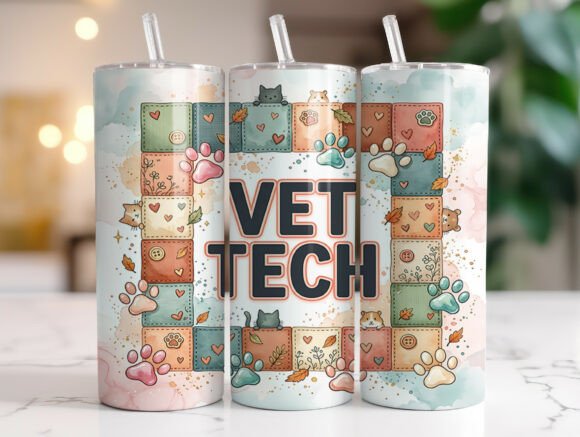
Vet Tech Tumbler Watercolor Paw Print: A Designer's Review
As a designer who spends more time staring at stitch maps than most people care to admit, I approach every new machine embroidery design with a mix of curiosity and skepticism. When I first pulled up the Vet Tech Tumbler Watercolor Paw Print, my initial reaction was one of visual appreciation. The watercolor aesthetic is trendy, soft, and undeniably charming, perfectly capturing the gentle spirit of veterinary professionals. However, my job isn't just to like how something looks on a screen; it is to determine if that image can survive the mechanical brutality of an embroidery needle while maintaining its artistic integrity.
This review breaks down the practical application of this graphic for real-world projects, moving beyond the digital preview to consider fabric texture, stitch density, and the final finished product quality.
The Visual Personality and First Impressions
The Vet Tech Tumbler Watercolor Paw Print carries a specific mood. It is not aggressive or overly bold; instead, it feels nurturing and professional. The watercolor style suggests fluidity and softness, which translates beautifully into concepts of care and healing. For a craft business targeting veterinary students, techs, or clinic owners, this design hits the right emotional note immediately.
Visually, the layout is balanced. The 9.3″ x 8.2″ dimensions provided in the file details suggest a substantial graphic, ideal for large surface areas. In the context of Tumbler Wraps and Graphics, this size is perfect for wrapping around a 20oz skinny tumbler, ensuring the paw print remains the focal point without getting lost in the curvature. However, for an embroiderer, these dimensions signal that we are dealing with a large coverage area. This means the transition from a digital PNG to thread requires careful planning regarding scale and placement.
Real-World Application Scenarios
Let's move this from the computer screen to the hoop. Imagine a local veterinary clinic ordering custom apparel for their upcoming staff appreciation week. They want something that looks boutique, not like a cheap promotional giveaway. Here is where the Vet Tech Tumbler Watercolor Paw Print shines as a versatile design asset.
Custom Apparel and Sweatshirts
For a sweatshirt embroidery project, this design would look stunning on the back of a heavyweight fleece hoodie. The soft edges of the watercolor effect can be mimicked using varied fill stitch densities, creating a painterly look rather than a solid block of color. On a front-left-chest placement, however, the full 9-inch width might be too overwhelming unless significantly scaled down, which risks losing the delicate details of the watercolor bleed.
Tote Bags and Aprons
A canvas tote bag design is another excellent candidate. Canvas offers a stable weave that handles larger designs well. Using this graphic on a reusable shopping bag for a vet clinic creates a high-value handmade product that clients will actually use. Similarly, an embroidered apron for a grooming station benefits from the durability of the theme, provided the stitching is dense enough to withstand frequent washing.
Patches and Accessories
Creating an embroidered patch is perhaps the most commercially viable option for an Etsy seller. By digitizing this PNG into a merrow-edge patch, you create a durable accessory that can be ironed onto scrubs or jackets. This transforms the digital file into a tangible small shop product with high perceived value.
Technical Considerations for Embroiderers
While the source file is a high-resolution PNG intended for sublimation or printing, adapting it for embroidery requires a critical eye. The "watercolor" look relies on gradients and soft fades, which are notoriously difficult to replicate with thread.
Stitch Density and Clarity
To achieve the watercolor effect, a digitizer must avoid heavy stitch density that turns the design into a plastic-like puckered mess. Instead, utilizing lighter fill stitches and strategic running stitch overlays can mimic the brushstroke texture. If you are purchasing this as a ready-to-stitch embroidery file, check the stitch count carefully. If it is too low, the gradient will look banded; if too high, the fabric will distort.
Fabric and Stabilizer Choices
Because of the large size, fabric choice is paramount. Stretchy fabrics like thin jersey knits are risky for a design of this magnitude without significant stabilization. You must use a cut-away stabilizer to prevent the design from sagging over time. For textured fabrics like towels or pique polo shirts, the soft edges of the watercolor design might get lost or appear jagged. Smooth, tightly woven cotton or polyester blends will yield the crispest finished product.
Dark vs. Light Fabrics
The original graphic likely features light, pastel watercolor tones. If stitching on dark fabric, you cannot simply stitch over the black background. You will need to incorporate an underlay or a satin stitch border to define the shape, or perhaps treat this as an applique design by cutting the shape from fabric and stitching it down. This adds dimension but also complexity to the production process.
Commercial Viability and Brand Consistency
For those running a craft business, consistency is key to building trust. The Vet Tech Tumbler Watercolor Paw Print offers a professional aesthetic that elevates brand perception. When a customer receives a personalized item with clean, well-executed embroidery, it reinforces their trust in your skills.
This design works exceptionally well for holiday embroidery gifts, such as Christmas ornaments for vet clinics or Valentine's Day treats for animal lovers. Its versatility allows it to fit into various seasonal marketing campaigns without feeling out of place. Furthermore, using this graphic in printable mockups for your online store can help visualize the final product, increasing buyer engagement before they even place an order.
Practical Designer Notes Before You Stitch
Before committing to a full production run, keep these practical steps in mind:
- Test on Scrap Fabric: Always stitch a sample on the exact fabric type you intend to sell. What looks good on muslin may pucker on fleece.
- Check Thread Contrast: Watercolor designs often use subtle color shifts. Ensure your thread colors have enough contrast to be visible but enough harmony to blend smoothly.
- Verify Hoop Size: With dimensions near 9 inches, confirm your machine's maximum hoop size can accommodate the design without re-hooping, which can lead to alignment issues.
- Inspect Small Details: Zoom in on the digitized version. Are the tiny droplets of the watercolor effect distinct, or do they merge into a blob? Adjustments may be needed.
- Licensing Check: Since this is sold as a digital graphic, confirm the license terms. Does the purchase allow you to sell physical embroidered items, or is it for personal use only? Never assume commercial rights are included unless explicitly stated.
- Mockup Testing: Create black and white mockups to see how the design holds up without color reliance. This helps identify potential density issues.
In conclusion, the Vet Tech Tumbler Watercolor Paw Print is a compelling visual asset that, when handled with technical precision, can become a standout piece in any custom apparel or gift lineup. It bridges the gap between digital artistry and tactile craftsmanship. Whether you are creating a baby embroidery piece for a new litter of puppies metaphorically speaking, or a robust logo for a clinic uniform, this design offers the flexibility and charm needed to succeed. Just remember, the magic lies not just in the download, but in the thoughtful execution of the stitch.