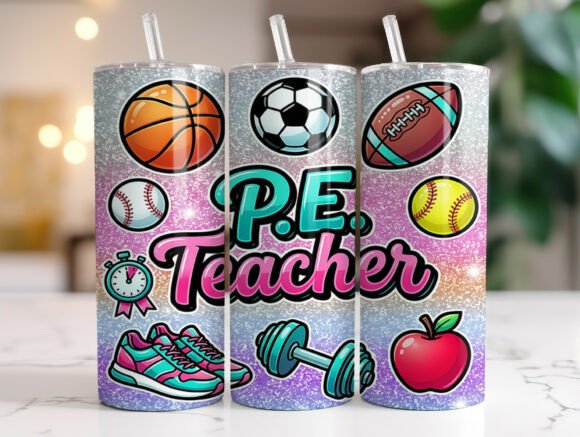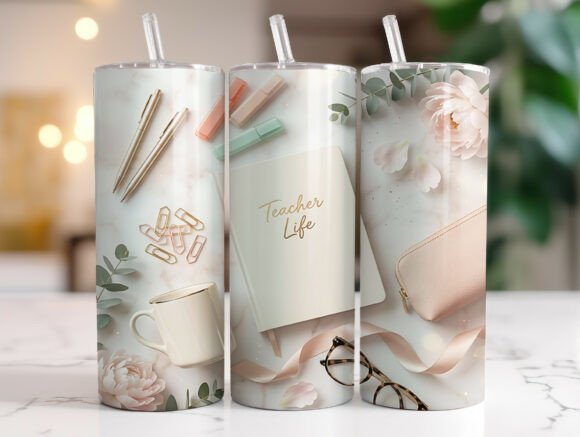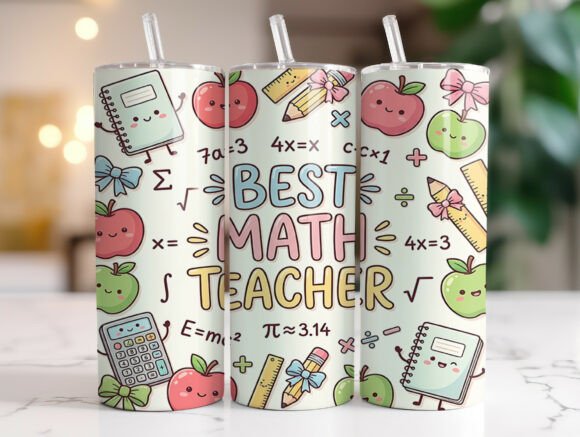
Retro Teacher 20oz Skinny Tumbler Wrap Review
As a designer who spends more time staring at stitch maps than most people spend on their phones, I approach every new digital embroidery file with a healthy dose of skepticism. We have all been there: you buy a cute graphic, digitize it (or download a pre-made version), and halfway through the run, you realize the stitch density is going to turn your fabric into cardboard. That is why I took a close look at the Retro Teacher 20oz Skinny Tumbler Wrap. While the product listing explicitly markets this as a high-resolution PNG for sublimation or printing on Tumbler Wraps, my mind immediately went to a different place: how can we adapt this aesthetic for actual thread work?
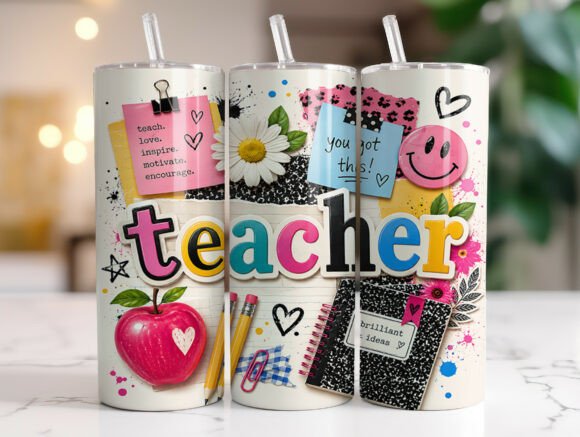
The first impression of this design is pure nostalgia. The "Retro Teacher" theme hits that sweet spot of 1970s warmth mixed with modern classroom chic. The layout, sized at 9.3″ x 8.2″ in its original graphic form, suggests a bold, statement piece. For an embroiderer, this visual personality translates beautifully into a handmade product that feels curated rather than mass-produced. The mood is inviting, perfect for educators who want to express their personality without sacrificing professionalism.
Adapting Graphics for Real-World Stitching
Here is the reality check: this file is sold as a graphic for Graphics applications on tumblers, not a native machine embroidery design. However, the clarity of the 300 DPI PNG makes it an excellent candidate for manual digitizing or conversion if you have the skills. If you are an Etsy seller or run a small shop, you might be tempted to use this exactly as is for heat transfer vinyl, but let's talk about elevating it with thread.
Imagine a scenario where a local school is ordering end-of-year gifts. Instead of another plastic tumbler that might get lost in a staff lounge, you propose a heavy canvas tote bag or a structured apron featuring this retro motif. The bold shapes inherent in the "Retro Teacher" style are ideal for fill stitch areas that pop against a neutral background. If you were to digitize this yourself, the large open spaces would allow for creative texture—perhaps a slight variegated thread to mimic that vintage, worn-in look that defines the retro aesthetic.
For those creating custom apparel, such as a oversized sweatshirt for a teacher appreciation week, this design offers fantastic versatility. The composition is balanced enough that it doesn't need to be shrunk down to a tiny pocket logo. It demands space. On a sweatshirt embroidery project, placing this centrally on the back or prominently on the chest creates a boutique feel that customers are willing to pay a premium for.
Material Considerations and Technical Challenges
Before you commit to stitching this out for a client, we need to discuss the substrate. Since the original art is designed for a curved, smooth surface (the skinny tumbler), translating it to fabric requires careful thought regarding fabric texture. If you attempt this on a highly textured waffle knit or a loose-weave linen, you risk losing the crispness of the retro lines. Smooth cotton twill, denim, or a tight-knit fleece are your best friends here.
There are specific areas where caution is required. If you decide to scale this down for a baby embroidery project, like a onesie or a nursery pillow cover, you must watch out for the finer details. Retro fonts often have unique curves and varying stroke widths. If these become too small in a reduced hoop size, they may require excessive satin stitch columns that could bunch up or break. Always test on scrap fabric first. I cannot stress this enough: what looks sharp on your screen at 300 DPI might turn into a muddy mess if the thread colors are too similar or if the stabilizer isn't robust enough.
Speaking of stabilizer, because this design likely involves large blocks of color if adapted for embroidery, you will need a cut-away stabilizer for stretchy fabrics like t-shirts. A tear-away might leave the design unstable over time, especially if the finished product is intended for frequent washing, which is common for custom apparel and tote bag designs. For rigid items like caps, the curvature adds another layer of complexity. The original wrap is tapered for a reason; flattening that perspective onto a curved cap brim might distort the "Retro Teacher" lettering. Stick to flat surfaces like patches or pillow covers if you aren't confident in your distortion compensation settings.
Commercial Viability and Brand Consistency
From a business perspective, the value of a design lies in its ability to build trust. When a customer sees a well-executed embroidered item, they perceive higher quality than a printed graphic. Using the Retro Teacher 20oz Skinny Tumbler Wrap as inspiration for a stitched embroidered patch could be a brilliant move for craft business owners. Patches are low-risk, high-reward items. You can stitch multiple units, inventory them, and apply them to various products later.
This approach also solves the licensing puzzle. Since the product description states "NO PHYSICAL PRODUCT WILL BE SHIPPED" and includes PNG files for tumbler wraps, you must verify the license terms before selling stitched goods. Many graphic designers allow personal use but restrict commercial redistribution of the digitized file. However, using the design as a reference to create a unique embroidered interpretation often falls under different rules. Always read the fine print. If the license allows for commercial use of the finished physical item, this design has high potential for holiday embroidery gifts, teacher appreciation bundles, or back-to-school promotions.
The visual appeal of this specific retro theme enhances brand consistency for shops targeting the education market. It feels cohesive. Whether it is on a kitchen towel for a teacher's lounge or a personalized name tag, the style remains recognizable. This recognition drives buyer engagement. People love themes that feel nostalgic yet fresh.
Final Verdict for the Maker
In conclusion, while the Retro Teacher 20oz Skinny Tumbler Wrap is technically a graphic asset for sublimation, its design DNA is perfectly suited for translation into thread. For the experienced maker, it represents an opportunity to create something tangible and durable. Just remember to respect the limitations of the medium. Check your hoop size constraints, ensure your stitch density doesn't overwhelm the fabric, and always prioritize the legibility of those retro fonts.
If you are looking to expand your design assets with something that screams "classroom cool," this is a strong contender. Just take the time to digitize it with care, choose your thread colors wisely to maintain that vintage contrast, and you will have a finished product that stands out in a sea of generic merchandise. Whether it ends up on a pillow cover, a sturdy tote, or a custom jacket, the result can be a cherished personalized gift that truly honors the recipient.