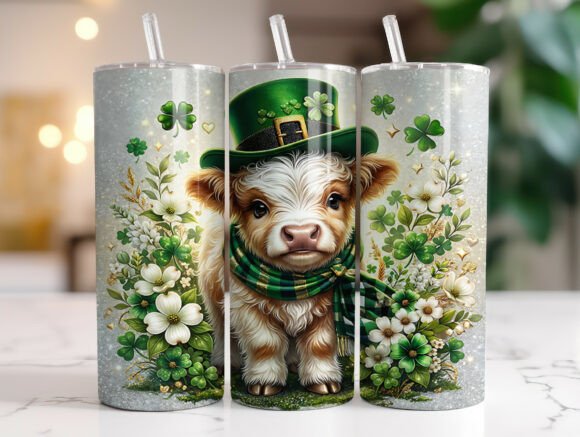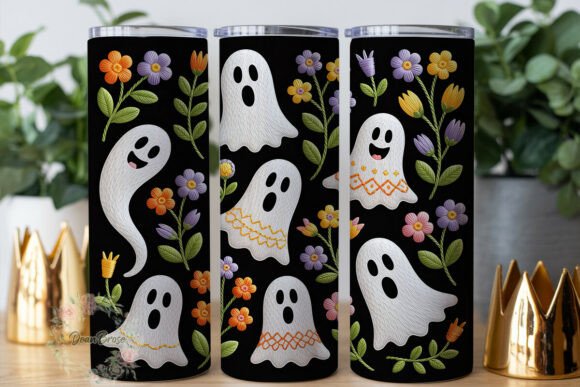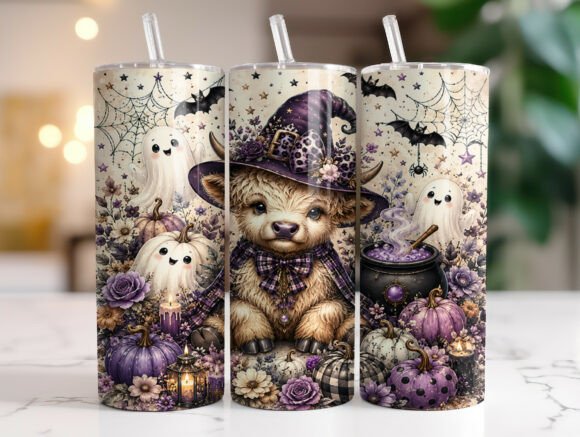
Ghost Pumpkin Highland Cow Tumbler Wrap Review
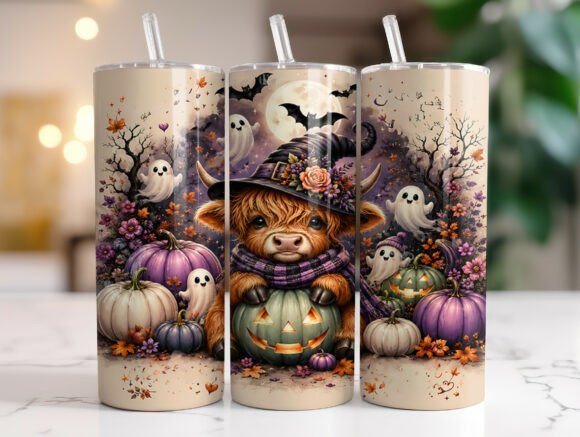
As a designer who spends more time staring at stitch maps than most people care to admit, I approach every new embroidery file with a mix of curiosity and skepticism. We have all seen the trend of highland cows taking over the crafting world, usually paired with flowers or seasonal motifs. However, when I first laid eyes on the Ghost Pumpkin Highland Cow Tumbler Wrap, my initial reaction was that this was strictly a sublimation graphic. The product details confirm it is a high-resolution PNG intended for 20oz skinny tumblers. Yet, in our line of work, a strong visual concept often demands to be stitched. So, I decided to evaluate this design not just as a digital asset, but through the lens of a practical machine embroidery design project to see if it holds up under the needle.
Visual Personality and Design Mood
The first thing that strikes you about this artwork is its whimsical yet cozy mood. It perfectly captures that specific "spooky cute" aesthetic that dominates autumn decor without being genuinely frightening. The combination of a highland cow—known for its shaggy, textured look—with a ghost pumpkin creates a charming narrative. For an embroiderer, the immediate challenge and opportunity lie in translating those soft, digital gradients and fine lines into tangible thread. The layout is compact, fitting within a 9.3″ x 8.2″ boundary, which suggests it was designed to wrap around a curved surface. When adapting this for fabric, that curvature translates well to rounded items like caps or the body of a tote bag, but it requires careful planning to ensure the composition doesn't feel distorted on flat surfaces.
The visual personality here is playful. It is not a serious, corporate logo; it is a conversation starter. If you are running a craft business or an Etsy shop, this kind of imagery stops the scroll. It appeals to customers looking for unique holiday gifts or personalized items that stand out from the generic "Happy Halloween" text designs found everywhere. The character of the cow, likely featuring those signature long bangs and horns, offers a fantastic opportunity to play with texture in your stitching.
Adapting the Graphic for Real Embroidery Projects
Let's get into the nitty-gritty of using this image in a real-world scenario. Since the source file is a PNG and not a native embroidery format, you will need to digitize it or use auto-digitizing software with extreme caution. My recommendation for a project like this is to treat it as a complex applique design or a mixed-media piece. Imagine creating a custom embroidered patch for a denim jacket or a heavy canvas tote bag design. The shaggy fur of the highland cow is begging for long satin stitch columns or even a textured fill stitch that mimics hair. A standard dense fill might look too solid and lose that wild, organic feel of the animal.
Consider a scenario where you are preparing a batch of sweatshirt embroidery orders for a boutique client. They want something festive for October but not overly childish. Using the ghost pumpkin motif on the chest of a heather grey crewneck could be stunning. However, because the original art is a tumbler wrap, the aspect ratio is wide. You might need to isolate the central character—the cow holding or wearing the pumpkin—and reframe it for a standard 4x4 or 5x7 hoop. This selective cropping allows you to maintain the detail level without forcing the design into an awkward shape on a garment.
For baby embroidery, the softness of the theme works wonderfully on a onesie or a receiving blanket. Here, you would want to reduce the stitch density significantly. Babies have sensitive skin, and a dense graphic meant for a stainless steel tumbler will feel like sandpaper on cotton knit. Using lighter threads and perhaps incorporating a running stitch outline for the pumpkin features can keep the hand-feel soft while retaining the visual appeal.
Technical Challenges and Fabric Considerations
Translating a high-DPI graphic meant for printing into thread comes with specific pitfalls. The most critical factor is fabric texture. On a smooth polo shirt, fine details might get lost if the stitch count is too low. Conversely, on a textured towel or a fuzzy fleece, those same details could disappear entirely into the pile. If you attempt this on dark fabric, remember that the original PNG likely relies on white or light backgrounds for contrast. You will need to manually add a backing layer or choose thread colors that pop against the dark material, rather than relying on the digital transparency.
Curved surfaces present another hurdle. While the design is optimized for a tapered tumbler, applying it to a structured cap requires distorting the image so it looks correct once stitched on the curve. If you stitch it flat on a cap front, the sides of the cow's face might look stretched. Furthermore, tiny lettering or intricate corners in the pumpkin stem or ghost eyes can easily become bird nests if the stabilizer isn't up to the task. For a project of this nature, I strongly advise using a cut-away stabilizer for stretchy fabrics and a heavy-duty tear-away for stable wovens. Do not skimp here; the integrity of the finished product depends on it.
Commercial Viability and Brand Consistency
From a business perspective, the Ghost Pumpkin Highland Cow Tumbler Wrap offers high potential for commercial embroidery ventures, provided you respect licensing terms. Since this is sold as a digital graphic, you must verify if the creator allows derivative works like embroidered items. Assuming the license permits it, this design asset can elevate your brand consistency. It allows you to offer a cohesive collection: a tumbler for the coffee lover and a matching embroidered apron for the baker. This cross-product strategy increases average order value and customer trust.
The "handmade" appeal of this design is strong. In a market saturated with mass-produced goods, an item that clearly shows the texture and effort of embroidery stands out. Whether you are selling personalized gifts for neighbors or creating inventory for a holiday craft fair, the uniqueness of a highland cow ghost adds a layer of professionalism and creativity that buyers recognize and appreciate. It signals that you are not just slapping a print on a blank; you are curating a design experience.
Practical Notes for the Studio
Before you commit to a full production run, heed these practical steps:
- Test on scraps first: Never skip the test stitch-out. Use the exact fabric and stabilizer combination you plan to sell.
- Check thread contrast: Digital screens display colors differently than thread charts. Ensure your ghost white doesn't blend into a cream-colored sweatshirt.
- Review stitch density: If digitizing yourself, pull back on the density for the "shaggy" areas to prevent puckering.
- Confirm hoop size: Ensure your reframed version fits your machine's maximum hoop without compromising the design's integrity.
- Inspect small details: Zoom in on the pumpkin's face and the cow's eyes. These tiny elements often break during washing if not properly anchored.
- Mockup in black and white: This helps you see if the design relies too heavily on color gradients that thread cannot replicate.
- Verify licensing: Double-check the seller's terms regarding commercial use of embroidered finished goods versus digital resale.
In conclusion, while the Ghost Pumpkin Highland Cow Tumbler Wrap starts life as a sublimation graphic, its core artistic value translates beautifully into the realm of embroidery with the right adjustments. It invites creativity, challenges your technical skills regarding texture and density, and ultimately results in a handmade product that feels special. Whether you are decorating a kitchen towel, a pillow cover, or a limited edition embroidered patch, this design has the charm to make your autumn collection memorable. Just remember to respect the medium; what works on metal needs a little translation to work on cotton, but the result is well worth the effort.