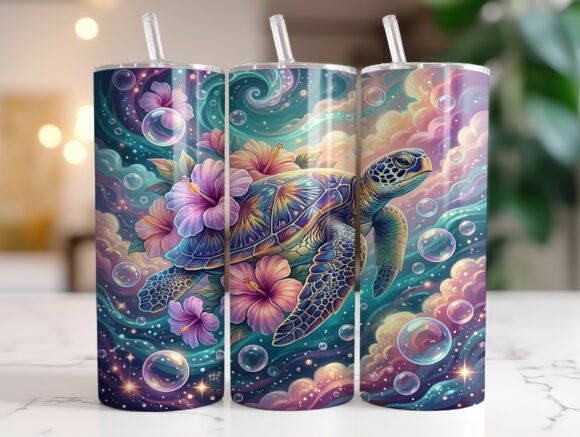
Sea Turtle Hibiscus 20oz Tumbler Wrap: A Designer's Review
As a designer who spends more time staring at stitch maps and fabric swatches than I do sleeping, I approach every new digital embroidery file with a healthy dose of skepticism. We have all been there: you buy a design that looks vibrant on the screen, only to find it turns into a puckered mess once the needle hits the fabric. Today, I am taking a close look at the Sea Turtle Hibiscus 20oz Tumbler Wrap. While the product listing categorizes this under Tumbler Wraps and Graphics, my job is to translate those high-resolution PNG assets into tangible, stitched reality for real-world projects.
The first thing that strikes me about this design is its mood. The combination of a sea turtle and hibiscus flowers immediately evokes a coastal, relaxed vibe. It feels like summer vacation, beach days, and island breezes. Visually, the layout appears balanced, with the organic curves of the turtle shell complementing the flowing petals of the hibiscus. For an embroidery project, this kind of natural shaping is usually a good sign, as it allows for varied stitch directions that can add depth and texture to the finished product.
Translating Graphics into Stitched Reality
It is important to clarify what we are working with here. The file includes one straight PNG and one tapered PNG, both at 300 DPI, sized at 9.3″ x 8.2″. As an experienced reviewer, I need to point out that these are graphic files intended for sublimation or printing on tumblers, not native machine embroidery design files like PES or DST. However, for us creatives, this presents a unique opportunity. Many of us use high-quality graphics as a base for creating custom applique design templates or for generating mockups to sell as design assets.
If you are planning to use this imagery for embroidery, you would likely be digitizing this graphic yourself or using it as a reference for a large-scale embroidered patch or back-piece on a jacket. The resolution is sharp, which is crucial if you are tracing elements to create satin stitch borders or large fill stitch areas. The clarity of the lines in the source graphic suggests that if digitized correctly, the resulting stitches would have excellent definition. The contrast between the turtle and the floral elements provides a natural roadmap for separating color blocks, which is essential for managing thread colors and minimizing jumps.
Real-World Application Scenarios
Let's imagine a realistic scenario. You run a small boutique near the coast, and summer is approaching. You want to launch a line of custom apparel that captures that local beach feel. Using the Sea Turtle Hibiscus 20oz Tumbler Wrap as your visual foundation, you could create a stunning sweatshirt embroidery piece. Imagine this design centered on the back of a heavy-weight cotton hoodie. The size of the original graphic (over 9 inches) allows for a substantial statement piece without losing detail.
Alternatively, consider the handmade product market. A large tote bag design featuring this motif would be incredibly popular for grocery runs or beach outings. Because the imagery is so distinct, it works beautifully as a focal point on canvas or denim. For those focusing on holiday embroidery or vacation gifts, this theme fits perfectly into "end of summer" sales or tropical-themed bridal party gifts. The versatility extends to home decor as well; a large pillow cover or a decorative kitchen towel featuring this sea life motif could elevate a bathroom or sunroom.
For the Etsy seller or creative entrepreneur, the value lies in the adaptability. You aren't just selling a tumbler wrap; you are selling a lifestyle. By adapting this graphic into various stitched formats, you expand your inventory. You could offer personalized gift options where the customer's name is added in a complementary script below the turtle, creating a unique item that stands out in a crowded marketplace.
Technical Considerations and Fabric Choices
While the potential is high, we must discuss the technical hurdles. Since the source material is a graphic intended for a curved surface (the tumbler), translating it to flat fabric requires careful thought regarding stitch density. If you are digitizing this for embroidery, avoid making the fill areas too dense. Heavy stitching on a large scale can make the fabric stiff and uncomfortable, especially on wearables like t-shirts or baby clothes.
Fabric texture plays a massive role here. On a smooth, tight-weave fabric like broadcloth or high-quality polyester, the details of the hibiscus petals will pop. However, if you attempt this on a textured fabric like a looped terry towel or a fuzzy fleece, you risk losing the finer lines of the turtle's flippers or the flower stamens. In those cases, simplifying the design into broader shapes or opting for an appliqué approach with a running stitch border might yield a cleaner finished product.
Caution is also advised when working with stretchy fabrics. A design of this magnitude (9.3″ wide) spans a significant area. Without proper stabilization, the fabric may pull or distort during the stitching process, leading to registration issues where the colors do not align perfectly. Always test your design on scrap fabric first. This is non-negotiable. Check how the design behaves on both light and dark backgrounds. While the graphic is colorful, ensure your thread selection provides enough contrast so the design doesn't get lost on darker garments.
Maximizing Value and Professionalism
In the world of commercial embroidery, perception is everything. The quality of your design directly impacts customer trust and brand consistency. Using a high-resolution source like the Sea Turtle Hibiscus 20oz Tumbler Wrap ensures that your digital mockups look professional. When customers see crisp, clear images in your online store, they anticipate a high-quality physical item. This psychological bridge between the digital preview and the physical handmade product is vital for conversion.
Furthermore, the uniqueness of the design aids in recognition. In a sea of generic palm trees and anchors, a well-executed sea turtle and hibiscus combo offers a specific narrative. It tells a story of nature and relaxation. This emotional connection can increase the perceived value of your items, allowing you to price your small shop product higher than generic alternatives.
Designer Notes for Success
Before you commit to production, keep these practical tips in mind:
- Verify Licensing: Since this is sold as a graphic for tumblers, double-check the license terms before using it for commercial embroidery products. Ensure you have the rights to modify and resell the stitched version.
- Check Hoop Size: The dimensions are large. Confirm that your machine's hoop size can accommodate the design, or be prepared to split the design into sections if your digitizing software allows.
- Stabilizer Selection: For a design of this scale, a cut-away stabilizer is often safer than tear-away, especially for garments that will be washed frequently. It prevents the weight of the stitches from distorting the fabric over time.
- Thread Contrast: Play with thread shades. Sometimes using a slightly darker or lighter shade than the original graphic can add dimension and make the embroidery look more dynamic than a flat print.
- Mockup Testing: Create black and white mockups to check the value structure. If the design falls apart in grayscale, it might be too busy for embroidery and may need simplification.
In conclusion, the Sea Turtle Hibiscus 20oz Tumbler Wrap is a versatile asset that extends far beyond its intended use on drinkware. With thoughtful digitizing and careful material selection, it can become the centerpiece of a successful craft business collection. Whether you are making a baby embroidery item for a seaside nursery or a bold statement piece for a summer festival, this design holds the potential to create beautiful, lasting memories. Just remember to respect the technical limits of your machine and fabric, and always prioritize a test run before launching your full production line.