Review: Colorful Butterfly Floral Tumbler Wrap for Stitchers
As a designer who spends more time staring at stitch maps than most people spend on their phones, I approach every new digital embroidery file with a mix of curiosity and skepticism. When I first pulled up the Colorful Butterfly Floral Tumbler Wrap, my initial reaction wasn't about how it looks on a screen, but how it would translate to thread. The listing describes it as a high-resolution PNG set intended for sublimation or printing on 20oz skinny tumblers, but my mind immediately went to a different application: adapting this vibrant graphic into a tangible machine embroidery design for custom apparel and home goods.
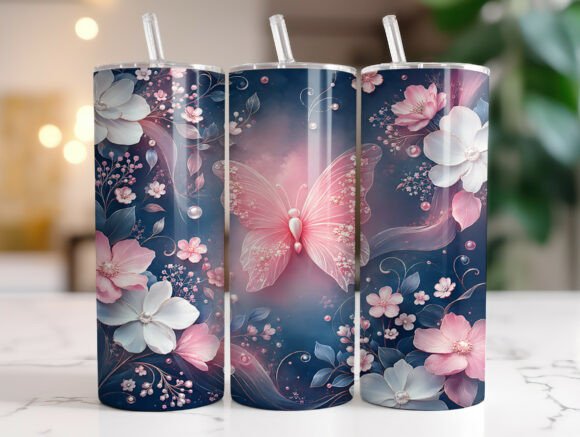
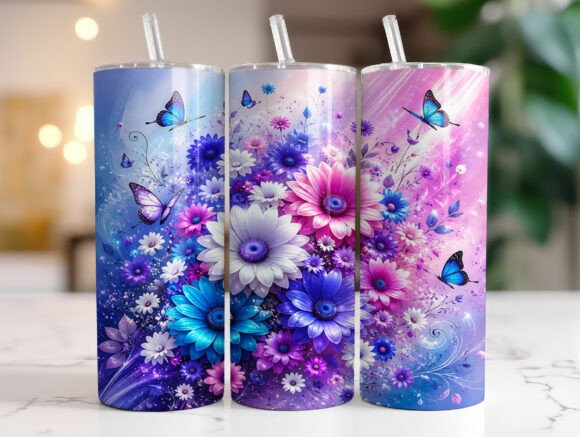
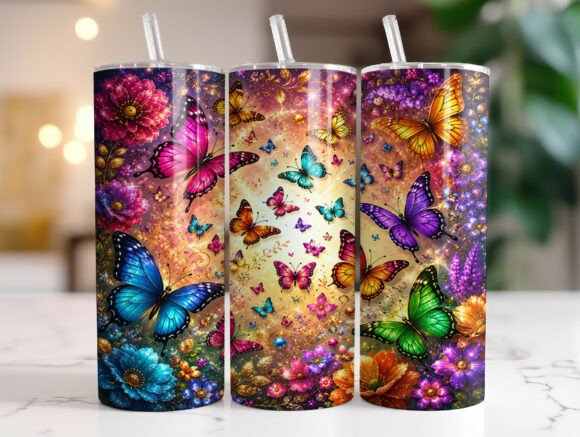
The visual personality of this graphic is undeniably cheerful. It features a lush arrangement of florals framing delicate butterflies, creating a mood that feels both spring-like and timeless. For an embroiderer, the first thing I analyze is the flow. Does the layout have natural breaks where I can change thread colors without creating a bird's nest on the back? In this case, the separation between the floral clusters and the butterfly wings suggests a well-thought-out composition. If digitized correctly, this could make a stunning sweatshirt embroidery piece or a focal point on a heavy canvas tote bag design.
From Screen to Stitch: A Real-World Scenario
Let's imagine a realistic scenario. You run a small boutique shop selling personalized gifts, and a client wants a matching set for a mother and daughter for an upcoming garden party. They love the aesthetic of the Colorful Butterfly Floral Tumbler Wrap but want it on clothing rather than drinkware. This is where your expertise comes in. You take this graphic concept and adapt it into an applique design or a dense fill stitch project.
The size listed is 9.3″ x 8.2″, which is quite large for standard hoops. This immediately tells me that for a finished product like a adult-sized hoodie or a pillow cover, you would need a large hoop machine or the ability to do a multi-hoop split. However, if you scale it down for a baby embroidery project on a onesie or a pocket detail on a denim jacket, the detail level becomes the critical factor. The intricate petals and butterfly wing patterns require high precision. If stitched too small, those fine lines might merge into a blob of thread, losing the charm that makes the original graphic so appealing.
Evaluating Performance on Different Fabrics
One of the biggest challenges with floral and insect motifs is managing stitch density. Flowers often tempt digitizers to use heavy satin stitches or dense fills to mimic painting. While beautiful, this can cause puckering, especially on stretchy fabrics like jersey knits used for t-shirts. If you are planning to use this motif for custom apparel, I strongly advise testing the density on scrap fabric first.
For textured fabrics like towels or waffle weave, a running stitch outline combined with lighter fill areas works best to prevent the design from sinking into the pile. Conversely, on smooth, dark fabrics, this design would pop brilliantly, provided you use high-sheen rayon or polyester threads to capture the "colorful" promise of the title. The contrast between the bright florals and the background is key to customer trust; a muddy, poorly contrasted embroidery job looks amateurish, whereas crisp, vibrant stitching elevates the perceived value of your handmade product.
Technical Considerations for the Maker
Before you commit to stitching this on a client's expensive garment, there are several practical steps to take. Since the source file is a PNG graphic and not a pre-digitized embroidery file, you (or your digitizer) will need to convert it. This is a crucial distinction. Do not assume the image translates automatically. You must define the stitch types manually.
- Thread Colors: Count the distinct shades in the graphic. If there are twenty shades of green for the leaves, simplify them to three or four for embroidery to keep production time reasonable.
- Stabilizer Selection: For a design of this complexity, a cut-away stabilizer is likely necessary to support the weight of the stitching, especially if used on a tote bag that will carry weight.
- Hoop Size: Verify your machine's maximum hoop size. As noted, the original dimensions are large. Scaling it down requires checking that the smallest details, like the butterfly antennae, remain stitchable.
- Fabric Texture: Avoid using this on highly textured fleece unless you use a topping, as the fine details of the flowers may get lost in the fuzz.
Commercial Viability and Branding
For Etsy sellers and creative entrepreneurs, the versatility of a design determines its ROI. The Colorful Butterfly Floral Tumbler Wrap offers strong potential for boutique branding. Imagine this motif embroidered on a linen apron for a florist, or as a patch sewn onto a denim jacket. These applications move beyond simple decoration; they become part of a brand identity.
However, you must be careful with licensing. The product description states it is an instant download of PNG files for tumbler wrapping. It does not explicitly state that the artwork is licensed for conversion into embroidery designs for resale. Always confirm the license terms before selling commercial embroidery items derived from this graphic. Using a sublimation graphic as a base for embroidery without permission can lead to copyright issues.
When done right, though, the visual appeal is undeniable. Customers engage with designs that feel organic and lively. The butterfly element adds a sense of movement, while the florals ground the design in nature. This combination is perennially popular for holiday embroidery (think Mother's Day or Easter) and wedding gifts. A well-executed version of this design on a high-quality blank signals professionalism. It tells the buyer that you care about detail, from the choice of thread to the stability of the stitch.
Final Thoughts on Adaptation
In conclusion, while the Colorful Butterfly Floral Tumbler Wrap is marketed for drinkware, its artistic merit holds significant value for the embroidery community—if approached with technical care. It serves as an excellent inspiration for embroidered patches, decorative pillow covers, or statement pieces on light jackets. The key lies in respecting the limitations of thread compared to ink. You cannot achieve the same gradient smoothness with thread as you can with a 300 DPI print, so embracing the texture of the stitch is vital.
My advice is to treat this graphic as a blueprint rather than a final map. Use it to guide your color palette and composition, but apply your own expertise in satin stitch direction and underlay strategies to ensure durability. Test your digitized version on black and white mockups to check contrast, and always run a test stitch-out on a similar fabric to your final project. By bridging the gap between digital graphics and tactile embroidery, you can create unique small shop products that stand out in a crowded market, turning a simple tumbler wrap concept into a cherished, stitched heirloom.