Mechanic 20oz Tumbler Wraps: A Designer's Review
As a designer who spends more time staring at stitch maps than most people spend watching television, I approach every new digital embroidery file with a healthy dose of skepticism. We have all been there: you buy a design based on a flashy thumbnail, only to find the stitch density is a mess or the details vanish once the needle hits the fabric. Today, I am taking a close look at the Mechanic 20oz Tumbler Wraps Sublimation graphics. While this product is marketed specifically for sublimation on tumblers, my job is to think outside the box. How does this visual asset translate when we move from ink to thread? Can these high-resolution PNGs serve as the foundation for a robust machine embroidery design or a hybrid craft project?
First Impressions and Visual Personality
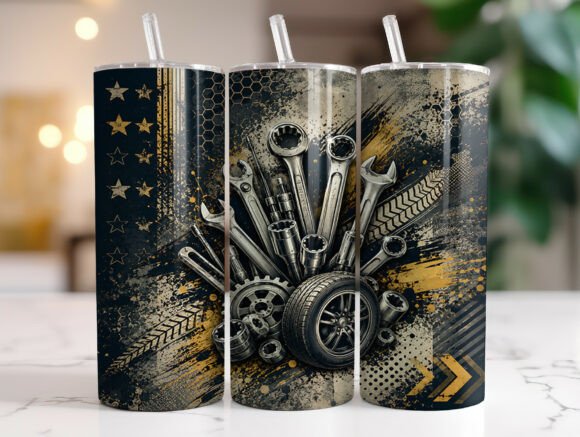
When I first opened the files included in this download, the immediate takeaway was the clarity. The package includes one straight PNG and one tapered PNG, both rendered at 300 DPI with dimensions of 9.3″ x 8.2″. For a graphic intended for a 20oz skinny tumbler, this resolution is solid. The "Mechanic" theme usually implies gears, wrenches, grease stains, and rugged typography. In this case, the layout feels balanced. It isn't cluttered with unnecessary noise, which is crucial when you are considering adapting a graphic for embroidery.
The mood here is industrial yet approachable. It speaks to the weekend warrior fixing up a classic car or the professional mechanic who takes pride in their trade. Visually, the design has strong contrast, which is the first green flag for any embroiderer. If a design relies on subtle gradients that only sublimation ink can capture, it fails as an embroidery candidate. However, the bold lines and distinct shapes in these Tumbler Wraps suggest they could be successfully traced or manually digitized into a satin stitch or fill stitch pattern without losing the core identity of the image.
Real-World Application: Beyond the Tumbler
Let's get practical. Imagine a scenario where a client comes to your craft business asking for a coordinated gift set for their husband, a master mechanic. They want a custom tumbler, obviously, but they also want a matching apron for the garage and a heavy-duty tote bag for carrying tools. This is where having access to high-quality Graphics like the Mechanic 20oz Tumbler Wraps Sublimation becomes a strategic asset.
For the tumbler, you use the tapered PNG for a flawless sublimation wrap. But for the apron and tote, you aren't limited to just printing iron-ons. Because the source file is so clean, you can use it as a reference to create a custom embroidered patch. You could digitize the central emblem of the mechanic design, apply a running stitch outline for definition, and fill the larger areas with dense stitching. The result is a textured, premium handmade product that elevates the perceived value far beyond a simple printed item.
I also see potential for sweatshirt embroidery. A oversized crewneck with this mechanic motif stitched in metallic gold or silver thread against a charcoal grey fabric would look incredible. The 9.3-inch width of the original graphic gives you plenty of room to scale the design down to fit a standard 5x7 or 6x10 hoop while maintaining detail integrity. This versatility makes it a strong contender for custom apparel lines targeting trade professionals.
Navigating Technical Challenges
However, we must address the elephant in the room: this is a raster image (PNG), not a native embroidery file. You cannot simply load this into your machine and hit start. To use this for stitching, you must digitize it or use auto-digitizing software with caution. This is where the stitch density becomes a critical conversation point.
If you are adapting this for a tote bag design made of canvas, you have some forgiveness. Canvas can handle higher density. But if you are attempting baby embroidery on a soft onesie or working with a stretchy performance fabric for a gym bag, you need to be careful. The original graphic might have fine lines that, if converted directly to satin stitches, could cause puckering or breakage over time. My advice is to simplify the details. Merge small adjacent shapes and ensure your underlay is sufficient to prevent the fabric from showing through.
Furthermore, consider the hoop size. While the graphic is large, your machine might not be. You may need to split the design into sections if you are aiming for a full-back jacket embroidery, though for most personalized gift applications like caps or pillow covers, scaling it down is the smarter route. On curved surfaces like caps, avoid placing dense fill stitches near the seam where the brim meets the crown, as the tension can distort the image.
Enhancing Brand Value and Customer Trust
In the world of Etsy seller competition and boutique branding, consistency is king. Using the same visual assets across different mediums—sublimated tumblers and embroidered textiles—creates a cohesive brand story. When a customer sees the same crisp mechanic logo on their cup and their work shirt, it reinforces professionalism. It tells them you didn't just grab a clip-art image; you curated a look.
The visual appeal of the finished product hinges on your execution. If you rush the digitization process, the text within the mechanic design might become illegible. Tiny lettering is the enemy of embroidery. Before committing to a final finished product, always test the design on scrap fabric that matches your final material. Check the thread color contrast. Does the silver thread pop against the black twill, or does it get lost? These small decisions determine whether your item looks like a mass-produced cheapie or a high-end small shop product.
Practical Notes for the Creative Entrepreneur
Before you list this as part of a commercial embroidery package or include it in a holiday embroidery collection, there are a few housekeeping items to review. First, verify the licensing terms. Just because you downloaded the PNG doesn't automatically grant you the right to resell the digitized embroidery file itself. Usually, you can sell the physical stitched item, but check the specific rules regarding design assets.
Second, remember that sublimation graphics rely on CMYK color blending, while embroidery relies on specific thread colors. You will need to manually select thread shades that mimic the original PNG. Don't rely on auto-color matching; trust your eyes. A gradient in the graphic might need to be represented by a single solid thread color or a carefully planned blend of two shades to avoid a muddy look.
Finally, consider the washability. Mechanic-themed items are likely to get dirty. If you are stitching this onto an apron or work shirt, ensure you use high-quality polyester threads that resist oil and frequent washing. A poorly stabilized design will warp after the first laundry cycle, ruining the giftability of the item.
In conclusion, the Mechanic 20oz Tumbler Wraps Sublimation pack is a versatile resource. While it is built for ink, its clean lines and strong composition make it an excellent candidate for adaptation into the world of thread. With thoughtful digitization and an eye for fabric texture, you can transform these Graphics into durable, tactile treasures that resonate with your customers. It is not just about making a tumbler; it is about creating a lifestyle brand around the craft of mechanics, one stitch at a time.