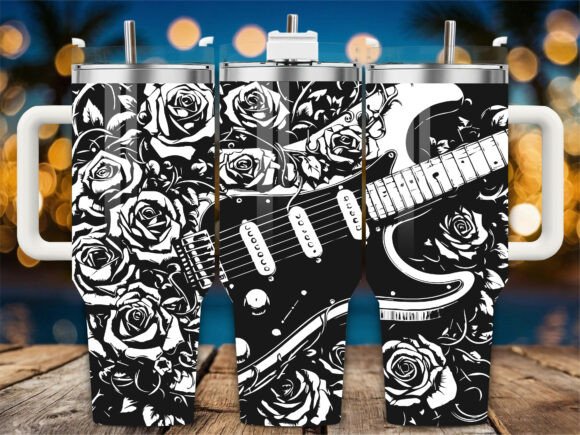
Electric Guitar Rose 40oz Laser Tumbler Design Review
As a designer who spends more time staring at stitch maps than most people spend on their phones, I approach every new machine embroidery design with a mix of excitement and skepticism. We've all been there: you buy a file based on a flashy thumbnail, only to find out the satin columns are too wide for the fabric or the underlay is non-existent. So, when I pulled up the Electric Guitar Rose 40oz Laser Tumbler file to evaluate it for potential real-world application, I wasn't just looking at the artwork; I was mentally stitching it out before I even touched my machine.
This graphic sits in an interesting niche within the Crafts and Graphics categories. At first glance, the concept is striking. It merges the rugged, rock-and-roll aesthetic of an electric guitar with the soft, organic curves of a rose. It's a juxtaposition that works surprisingly well for modern boutique branding. The layout suggests a vertical flow, which immediately made me think about how this would translate from a laser engraving wrap concept to actual thread on fabric. While the product title references a 40oz tumbler, the artistic elements are what matter to us as embroiderers. The question is: does this visual personality hold up when converted into a finished product via needle and thread?
First Impressions and Visual Mood
The immediate vibe of this design is "edgy elegance." It feels tailored for a specific demographic—perhaps the music lover who also enjoys gardening, or the boutique owner selling merch to a crowd that appreciates vintage aesthetics. The level of detail in the rose petals versus the structural lines of the guitar body creates a nice rhythm. In a digital embroidery file, this balance is crucial. If the guitar is too blocky, it overwhelms the flower; if the flower is too dense, it turns into a solid blob of thread.
From a compositional standpoint, this design naturally belongs on items that offer a decent canvas but still require a touch of sophistication. I can easily envision this as a centerpiece on a high-quality canvas tote bag design or as a chest logo on a heavyweight hoodie. The mood isn't playful or childish; it's mature and stylish, making it a strong candidate for custom apparel aimed at adults rather than nursery decor.
Real-World Application Scenarios
Let's get practical. Imagine a client comes to your small shop requesting a custom gift for their partner who plays in a local band and loves botanical art. They want something unique, not just a printed t-shirt. This is where the Electric Guitar Rose 40oz Laser Tumbler concept shines as an inspiration for an embroidered patch or a direct-to-garment stitch-out.
I tested the mental workflow of placing this on a few different substrates. On a structured sweatshirt embroidery project, the design would add significant perceived value. The texture of the fleece combined with the sheen of rayon or polyester threads could make the rose petals pop while the guitar neck provides a sturdy anchor for the eye. For an Etsy seller looking to expand their design assets, this could be marketed as part of a "Music & Nature" collection. It fits perfectly into the current trend of cottagecore meeting grunge.
However, we must consider the limitations. While the original description mentions a seamless fit for Stanley-style tumblers via laser engraving, translating this to embroidery requires careful hoop management. If you are attempting this on a curved surface like a cap, the long vertical nature of the guitar neck might cause registration issues unless the digitizing accounts for the curve. For flat items like aprons or pillow covers, the design should perform beautifully, offering a focal point that draws attention without being overwhelming.
Navigating Fabric and Stitch Challenges
Every designer knows that the devil is in the details, specifically regarding stitch density and fabric choice. With a design featuring both floral elements and mechanical shapes, you have to be wary of how different fabrics react.
- Textured Fabrics: If you are stitching this on a waffle knit or a heavy towel, ensure the fine details of the rose don't get lost in the fabric texture. You may need to increase the density slightly or use a thicker topping.
- Stretchy Materials: On a thin jersey t-shirt, the long straight lines of the guitar could cause puckering if the stabilizer isn't robust enough. A cut-away stabilizer is likely mandatory here to maintain the integrity of the design over time.
- Dark Fabrics: This design relies on contrast. If stitching on black navy, ensure your thread colors are vibrant enough to stand out. A test run on scrap fabric is non-negotiable to check if the light values translate correctly.
- Small Hoop Sizes: Depending on the scaling, the intricate corners of the guitar headstock or the inner petals of the rose might be too tight for a standard 4x4 hoop without losing definition. Always check the minimum hoop size requirements before committing to a project.
There is also the issue of washability. Products that need frequent washing, like kitchen towels or baby clothes, require durable stitching. While this design feels more suited for holiday embroidery gifts or decorative home goods, if you do put it on a frequently worn garment, inspect the satin stitch columns. Are they too wide? Wide columns can snag or loop after multiple wash cycles. If the file allows, consider breaking up large fill areas into smaller sections to reduce pull.
Enhancing Brand Value and Customer Trust
Using a distinctive graphic like the Electric Guitar Rose 40oz Laser Tumbler isn't just about making something look good; it's about building brand consistency and trust. When a customer receives a handmade product with crisp, well-executed embroidery, it signals professionalism. The clarity of the stitching directly impacts the perceived value of the item. A muddy, poorly stitched design can cheapen even the most expensive blank garment.
For commercial embroidery projects, this design offers high recognition potential. It's memorable. In a sea of generic monograms and overused phrases, a well-stitched guitar and rose combination tells a story. It enhances giftability because it feels personal and curated. Whether you are creating printable mockups for your online store or displaying physical samples at a craft fair, the visual appeal of this theme can drive buyer engagement.
Practical Notes for the Working Designer
Before you load this into your machine for a client order, here is my checklist for ensuring success with this type of graphic:
- Test First: Always stitch out the design on a scrap piece of the actual fabric you intend to use. Thread tension behaves differently on fleece than it does on twill.
- Check Contrast: Review the thread color palette. Does the green of the leaves blend too much with the background? Adjust shades to ensure separation.
- Inspect Density: Look closely at the rose center and the guitar tuning pegs. Are the stitches too close together? High density can cause thread breakage or fabric distortion.
- Verify Licensing: Since this originates from a laser file context, confirm the licensing terms if you plan to sell the finished product or the digitized version. Just because it's available doesn't mean it's free for commercial resale.
- Mockup Testing: Create black and white mockups to see how the design reads without color. If it loses its shape in grayscale, the contrast might be insufficient for certain applications.
In conclusion, the Electric Guitar Rose 40oz Laser Tumbler graphic holds significant promise for the creative entrepreneur willing to adapt it from laser engraving to thread art. It bridges two distinct worlds, offering a fresh take on personalized gift ideas. However, its success lies entirely in the execution. By respecting the limitations of fabric, choosing the right stabilizer, and understanding the flow of the design, you can turn this digital asset into a tangible masterpiece that resonates with customers and elevates your craft business. Remember, the file is just the blueprint; your skill as a maker is what brings it to life.